Squid Game adds some serious terror to nostalgia by turning some of our favourite playground games into legitimate survival and forcing people into facing some of the biggest moral dilemmas in order to survive and win.
If you’ve watched Squid Game, then you’ll know that there are 6 rounds in the competition, making up 6 games that the players must play in order to survive and win the giant piggy bank of cash… but is there really only 6 games? I think there are more. Let me break it all down as we take a look at each game…
This contains MAJOR spoilers, so if you haven’t watched Squid Game yet, I HIGHLY recommend that you stop here and go watch it first before proceeding.
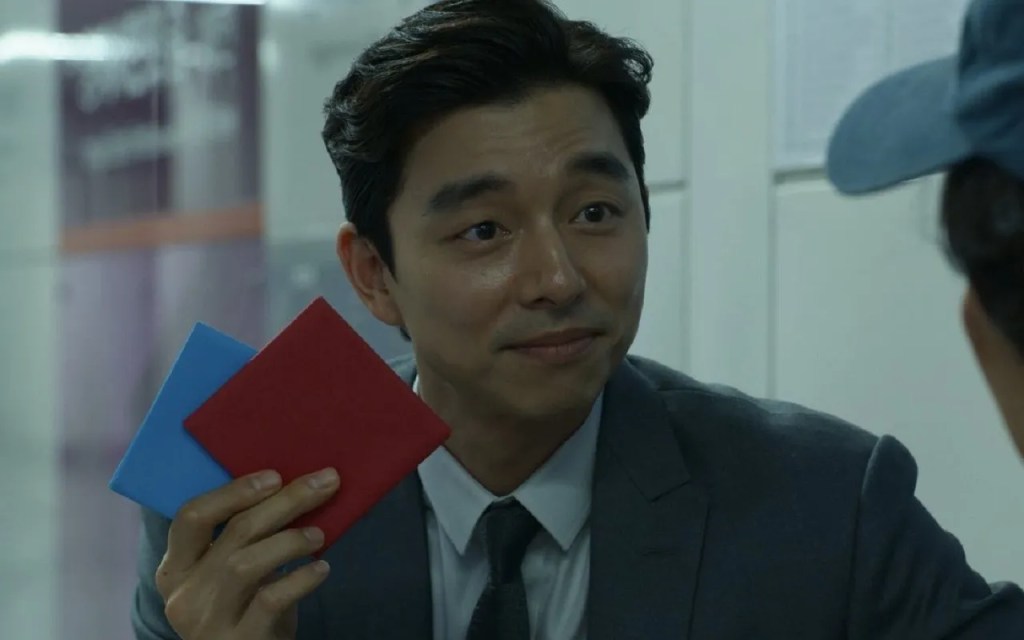
The Recruiting Round: Ddakji
Ddakji is a traditional South Korean game in which there are two squares of folded paper and each player takes turns at throwing one down on square to hit the other square in an attempt to flip it over. It’s similar to pogs or tarzos where you would have to throw the “slammer” and hit the pogs/tarzos and get them to flip, then the player takes any flipped pogs/tarzos and the unflipped get stacked again for the next round.
So why is Ddakji one of the games? That would be because it is the recruiter round. Players are already selected to partake in the games, the creator and Front Man already know everything about these people and have selected them to play. The recruiter round is the first mind game, like a kind of conditioning; it plays on the desperation that the person is already facing, adding some salt to the wound and hooking them by making them believe that they can have an easy way out of their financial hardships just by playing a few kid games. Even during the game of Ddakji, the player is lured into a false sense of security by being allowed to be slapped when they lose instead of having to pay money that they don’t have, making it seem like easy money. When they finally win they get their money and an invitation to play a higher stakes game. Now, if you think about it, the slapping for losing kind of foreshadows the fact that if you lose in the higher stakes you will get physically hurt, but in no way did I foresee death as a penalty until I saw it happening.
Basically, the fact that the players are specifically targeted and not just randomly selected by whoever is at the train station at that time, this game plays on their hardship and desperation and conditions them to believe they can get some easy money just by publicly physically humiliating themselves for some cash. It’s a deliberate mind game and a hook, and that is why I believe that the Recruiter Round is actually the first round.
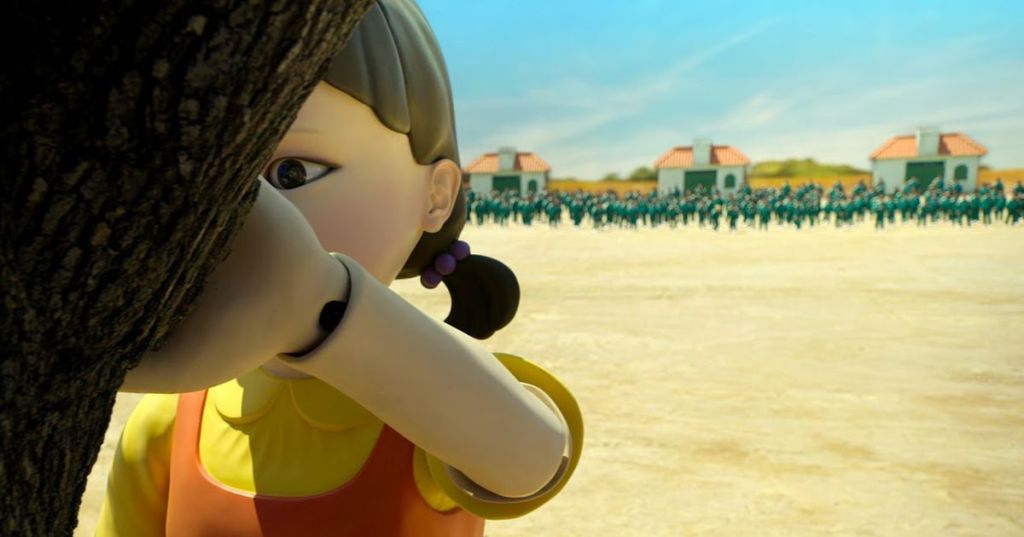
Round 1: Red Light Green Light
Red Light Green Light is a popular played on the playground. If you aren’t aware of the rules, here they are: A group of players stand on one side of a field while one person stands at the other side of the field. The goal is for the players to reach the other side where they will be safe, but they can only move when the single player has said “green light” and has their back turned. Players must stop when the single player says “red light” and turns to faced them. If anyone is caught moving after “red light” has been called, they will be eliminated.
After an incredible display of Darwinism with an unfathomable amount of people deciding to run in an attempt to escape (I understand how “fight or flight” works, but considering how obvious it is that you will die if you move, I find the high number of people who chose to stampede to the locked doors incomprehensible), this is the round that kicks off some serious business, beginning the battle of morality that people will go on to face in future rounds. We see people using sneaky tactics by ghosting others (ghosting = following closely behind like a shadow) to avoid being seen by the motion detectors; we see people sabotaging others by making sure they get caught moving by pushing and tripping them; and we see an act of compassion where Gi-hun trips right as “red light” is called and Ali catches him so he isn’t caught moving. This is the round where everyone realises how high stakes the games are; if they are eliminated, they don’t pay with a slap like they did when playing ddakji, they pay with their life.
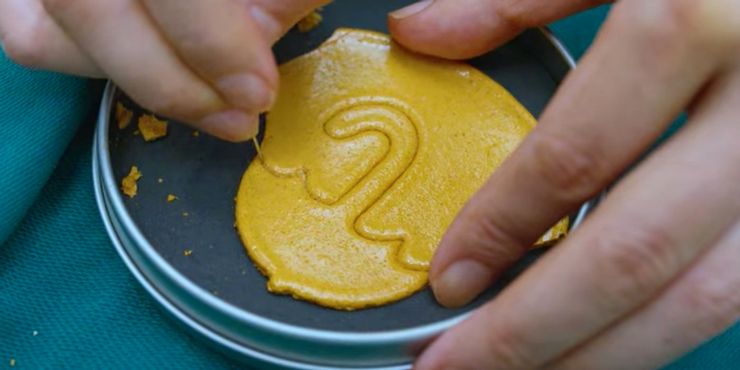
Round 2: Honeycomb / Ppopgi
Ppopgi, or honeycomb candy, is a popular South Korean street candy made with sugar and bicarb soda. Vendors would create shapes in the candies and children would attempt to cut the shapes out without breaking them. This favourite childhood activity is the inspiration behind round 2, where players must cut out the shape – a triangle, circle, star, or umbrella – without breaking the shape; if the shape is broken, even by a hair, you will lose and you will be eliminated.
Some of the players know what they are walking into when they go into round 2, thus sparking a huge moral dilemma – “do I share this information with my friends, or do I keep it to myself and give myself the best chance at survival and winning?”. We witness a pivotal moment when Sang-woo decides to keep the information to himself and lets his friend take the most challenging shape of the game – the umbrella – while he takes the easiest shape – the triangle. This is the moment where it is made pretty clear that Sang-woo can’t be trusted and will do everything and anything to win, even if that means betraying his relationships. We also witness cheating from Mi-nyeo when she brings a lighter in and uses it to heat the needle so she can melt through the candy and remove the shape with ease, and once she passes the round she shares the lighter with Deok-su, to foster a bond in hope that teaming with the strongest person there she will further herself in the games.
In my opinion, this is probably one of the most terrifying rounds. Your life hangs on whether or not you can cut a shape out of candy, and the silence in the room apart from the needles scratching on the candy creates a nail-biting tension that only successfully removing the shape can relieve. The amount of stress that would be coursing through your body would be immense, and the fear that would wash over you the second you saw a crack appear would be beyond description. Not to mention the variables of each candy not being identical; these were hand made by various people, meaning the thickness of each candy could be different and therefore the difficulty of cutting each shape would vary. Also, you face the risk of being poisoned if you eat the candy because you don’t know if the candy is laced or not. This is more than a round of skill; this is a round of mental strength. If you can stay calm and focused, you are more likely to succeed.
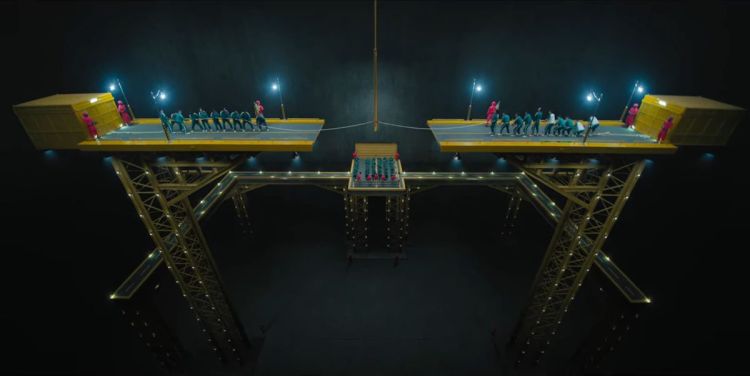
Round 3: Tug of War
Tug of war is a familiar and popular game worldwide, and has been popular in Korea since ancient times when this rope pulling game was played during the lunar festival. This game of tug of war takes things to the extreme; players are handcuffed to the rope, and if the losing team falls off the ledge and the rope is cut so they fall to their death.
This round also plays on morals as they are forced to form a team of 10 without even knowing what the game is. This forces them to dive into the whole male vs female thing about how males are superior because they are stronger and how they should have an all male team. They also wonder whether it is worth having some females on their team in case they are presented with “girls games” like elastics. This is possibly the most sexist thing in the show, but it is sadly accurate because let’s be honest, if any of us were faced with such a thing, gender equality would not come into anyone’s minds.
Up until this round players competed individually. This round pushes people to rely on others and play as a team. Winning as a team gives players an inevitable bond as they have been forced to place all their trust in their team mates… just a bit of a mind fuck if you ask me. I’d be super suss on the fact that we were all playing as a team.
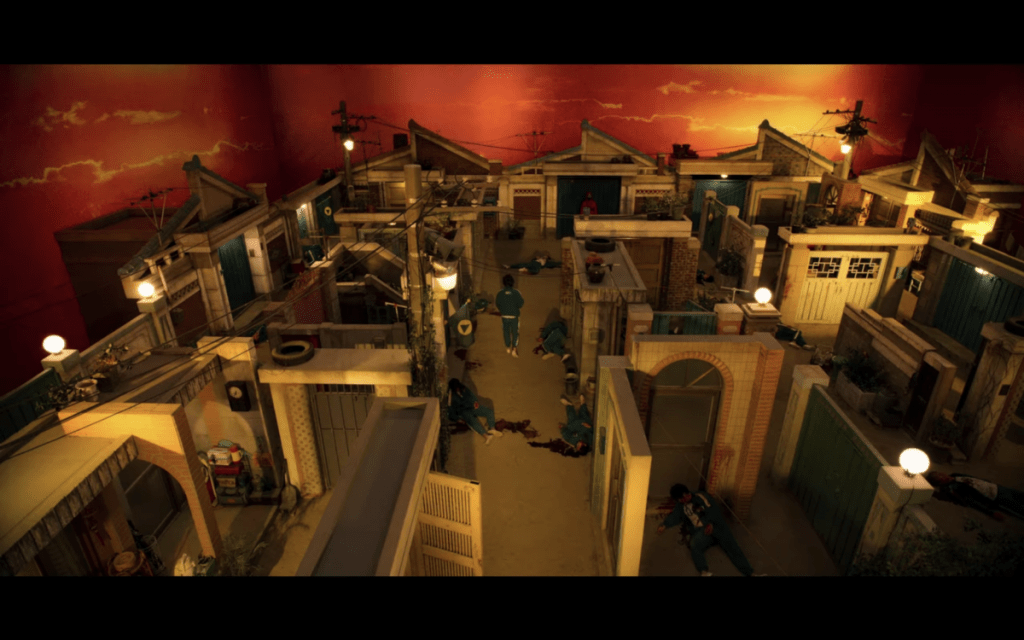
Round 4: Marbles
Marbles is a popular game world wide, and there are various games that you can play with marbles. In this round, players were told to get into pairs. Again, just like the previous round, they did this without knowing what game they would be facing. They assumed that being in pairs would mean that they were playing as a team of 2… however, once they entered the area, they were told that they must play against each other… and thus kicks off the most heart wrenching thing I have seen on my screen in a long time.
The rules of this round: each player is given 10 marbles, and a player wins when they obtain their opponent’s 10 marbles, giving them a total of 20 marbles. They can play whatever game they like and do whatever they want in order to obtain these marbles without using violence.
When I think of marbles, I remember the school playground being covered with holes where everyone played the game where players would stand behind a line and would throw/roll a marble towards the hole and if their marble went in the hole then they would win all the marbles on the ground. This was one of the many games played in this round. The main game that was played was a game that I had not seen or heard of before; one player would hold some marbles in their hand, the other player would then guess odd or even, then the player would open their hand to reveal how many marbles they were holding. If the guess was correct then they would have to hand over the marbles, if the guess was wrong, then the other player would have to hand over that number of marbles that the player was holding.
This round was heavy on chance and skill, as well as facing the players with possibly the biggest moral dilemma of the entire competition. In their desperation, players used manipulation to gain advantage and win. Most notably, Sang-woo telling Ali that they could play as a team and win to get through the round together and putting the 20 marbles into one bag and swapping them out to put a bunch of gravel in the bag he gives back to Ali for “safe keeping”, so then Sang-woo takes all the marbles and wins the round, meaning he sacrificed his friend so he could survive and win. The sound of Ali shouting “Sang-woo! Sang-woo!” as he is looking for his friend just before he realises he has been betrayed and is killed haunts me. The most heart breaking thing of this round though… Gi-hun choosing compassion and friendship over competitive edge, and then not only realising he would have to play against his friend, but using the dementia of his friend against him by tricking him in order to get all the marbles. Watching Gi-hun’s internal battle with guilt for tricking his friend and therefore sending him to his death, and his desperation to survive is incredibly difficult to watch, and it fills my heart with immense sorrow and makes me feel physically ill with grief.
This round is truly brutal, and it really shows how far people will go in order to survive and win some cash. I mean, if you are willing to betray someone you have a real connection with knowing full well that they are going to die, then you’re basically willing to do anything, right?

Round 5: Stepping Stones
Stepping stones gives me some serious nostalgia and takes me back to the school playground. If you haven’t played this game before, here are the rules: There is a path of “stepping stones” (something that can be stepped on, usually pieces of cardboard) that stretches across a room or a field. Players start on one side and must jump across each of the “stones”, with one foot always remaining on one of the “stones”. If a foot isn’t touching a “stone” when stepping across, then that “stone” disappears, making the space between each “stone” wider and harder to get across.
This competition doesn’t make it that simple though; these stepping stones are made of glass and are a high bridge, and the player in the front must choose between two panes to jump across to. One pane is tempered and will be strong enough to hold 2 people; the other pane will smash on impact and the player will fall to their death.
This round is quite possibly the most terrifying of them all. You have to jump leaving it completely up to chance as to whether you are going to be safe or fall to your death. There’s not a lot more that I can think of that could be scarier than forcing yourself to jump and leaving your life completely up to chance. We also saw more morality being thrown out the window in desperation as players pushed other players to sacrifice them. I mean, if it came down to it, I would probably do the same if it meant that I wasn’t going to fall to my death.
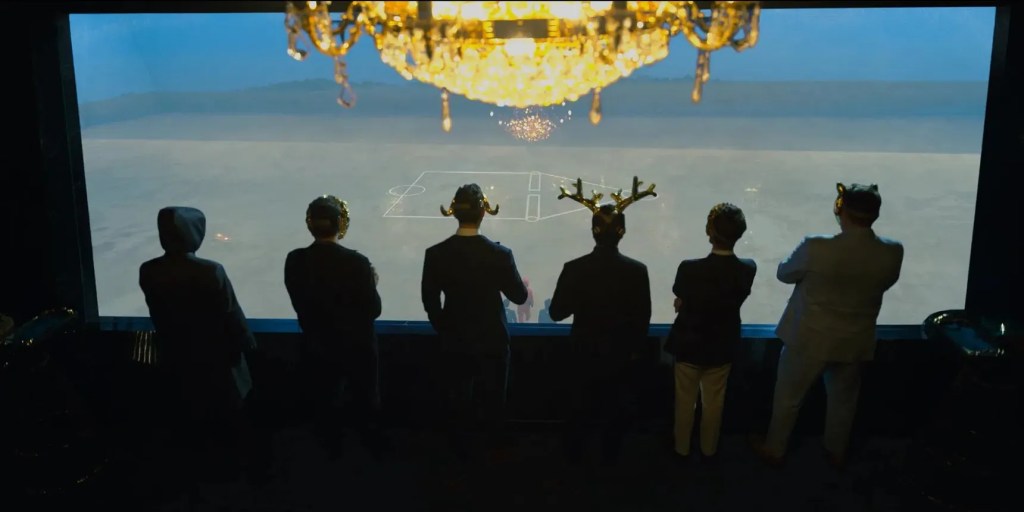
Round 6: Squid Game
Squid Game – the “final” round – is actually a real game in Korea that was played in the 70s and 80s. It is named after the squid shape created by the shapes on the playing ground (the triangle, square, and circle). I had never heard of it, but that’s hardly surprising considering I’m not Korean or from the 70s or 80s. Even after watching and knowing there was an offence and defence, I still wasn’t completely clear on how it worked, so I had to look it up. Here are the rules: players are divided into 2 teams; the offence and the defence. The defence side can run around within bound on both feet, however while the offence can only hop on one foot while they are outside the line. If/When a player from the offence cuts through the waist of the squid (crosses the line into bounds) then that player looses their handicap and is allowed to use both feet. In order to win, the offence must reach the squid’s head (the small circle). However, if a defensive player pushes an offensive player out of bounds then they die (metaphorically) and are out of the game. The defence is allowed to do anything, even resort to violence, in order to keep the offence from progressing and reaching the squid’s head.
Now, while the death of a player is metaphorical in the playground rules, the rules in this competition are literal – that is, players will play to the death. Who ever wins this round wins the whole competition and wins the cash.
In this round we see good friends Gi-hun and Sang-woo pitted against each other on a 1v1 game of squid game. They both have their knives that were left for them from their steak dinner the night before, so they are both armed and in for a fair fight. It’s already been proven previously that Gi-hun can’t trust Sang-woo and he knows that Sang-woo will do whatever it takes, so Gi-hun has to play smart in order to survive… which he does by disabling Sang-woo by throwing sand in his face so that he can progress forward and gain use of both of his feet. Things get really intense as the friends battle it out, and Gi-hun literally becomes within a step of winning the competition, but he can’t bring himself to have his friend’s death on his hands. So, he tries to convince Sang-woo to leave the competition with him so that they can both leave together. Sang-woo then sacrifices himself, asking Gi-hun to make sure his mother is looked after.
While this round is pure survival, it also plays into a deep moral dilemma of how far you would go for money. Yes, there had been PLENTY of deaths prior to this, and there had been moments that proved friendship wasn’t enough to stop the sabotage in order to proceed, but this round take it up a notch. With it being one on one, these two friends are face to face and forced to battle it out. Gi-hun has too kind of a heart to kill his friend, and Sang-woo – while he had demonstrated otherwise previously – displays one final act of kindness as he sacrifices himself so that Gi-hun can win. There is a huge struggle – physical and emotional – in this round, and the end result restores some faith in humanity after everything that had preceded.
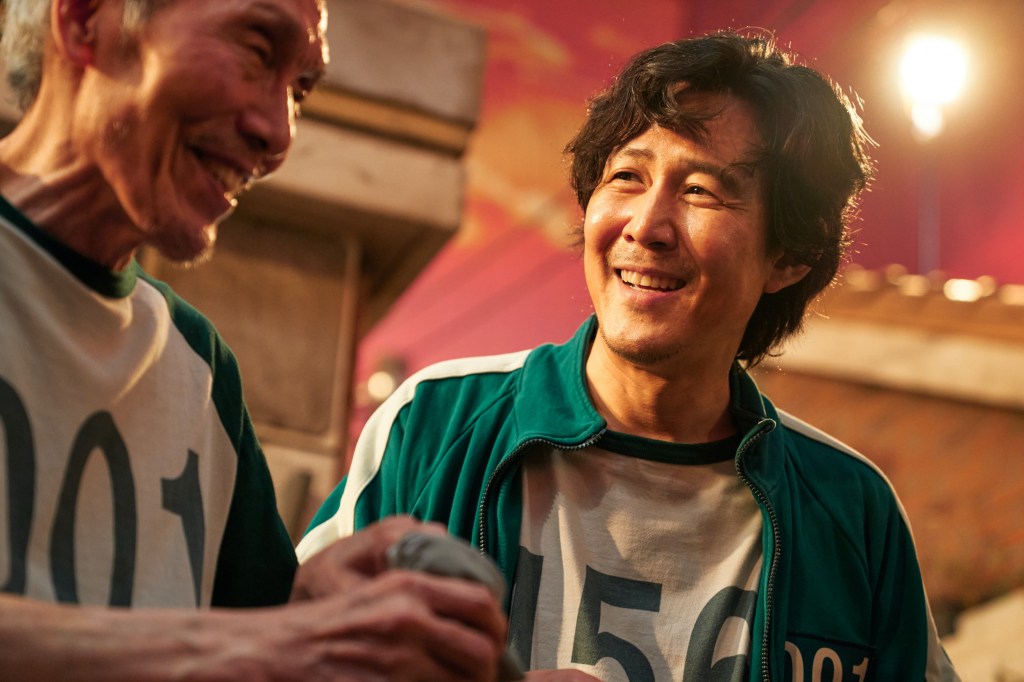
BONUS ROUND 1: Gganbu, aka Befriend the Old Man
After everything, we find out in a major plot twist that Il-nam is the mastermind behind the games. I was suss on this guy from the start; there was just something about him that didn’t add up. Why would someone so close to the end of their life bother with such a competition? Why was he enjoying it so much? Not to mention his level of nostalgia with each game was just next level.
Viewed as the feeble old man, no one was game to side with him thinking that he would hold them back… everyone, that is, except for Gi-hun. Gi-hun is compassionate and he almost immediately sparked a bond with Il-nam. This friendship was further fostered when they crossed paths on the outside after leaving the game after round 1. They shared a meal and talked and connected, which strengthened their friendship. This alliance paid off as Il-nam’s knowledge of the games came in handy when talking tactics, especially when it came to the tug of war round. The depth of their bond became evident during the marbles round where Il-nam dubs Gi-hun his gganbu (neighbourhood best friend); the immense guilt that Gi-hun felt for tricking his friend and sending him to his death (which we now know was staged), and the forgiveness and compassion that Il-nam gave to Gi-hun as he said goodbye to his friend before his elimination from the games. Not only was Il-nam helpful in providing insight and creating tactics for games, since he was the mastermind behind the entire thing, he also knew which games were coming up. Il-nam chose to continue helping his friend by giving him the last marble not only as a token of their friendship, but to help him in the next round with the glass stepping stones, which Gi-hun wouldn’t come to realise until later on.
Now, I could just be coming up with a bunch of conspiracy here, but I truly think that becoming friends with the old man and choosing compassion over competition was part of the psychological aspect of the competition. It also got me thinking, was that chance meeting between Gi-hun and Il-nam during that brief period of time outside the competition really a chance meeting, or did Il-nam specifically target Gi-hun to see how he would interact with him in a real life situation where they aren’t being forced to create false bonds to survive? Was Il-nam using this “chance meeting” as a way to see if Gi-hun was worthy, and therefore did Il-nam choose Gi-hun and help give him advantages through the games to help him have a better chance at winning?
There’s a lot to break down with Il-nam and I could go on almost endlessly about him, but I might save that for another post… but I do truly think that befriending the old man is part of the competition, even if it is indirectly, and it really goes to show that compassion can get you a long way.
BONUS ROUND 2: Survival
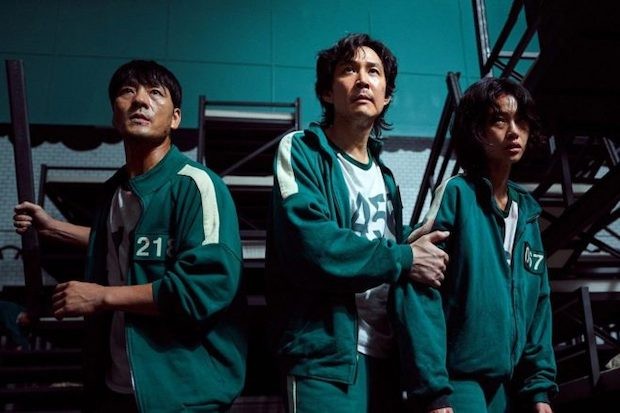
Amidst the chaos of people finding their place in the holding room with people asserting their dominance, a player dies and the cash for their life is dropped into the piggybank. It is in this moment where the group realise that it’s not just the games that they have to survive; it is the entire experience that they have to survive. It is also in this moment where players face a huge moral dilemma; do they look out for themselves or team up and protect each other. This is adamant in the when the lights go out and a riot breaks out in order to cull the herd. However, in a competition where there can only be one winner, working as a team will only get you so far and it really is every person for themselves. This is clearly shown when the final three is reached; the team mates must decide whether or not they will turn on each other. Gi-hun is too compassionate so we know he won’t resort to such a thing, but Sang-woo takes the opportunity and kills Sae-byeok while Gi-hun is trying to get her some help for her injuries.
So why is this part of the games? It’s psychological and plays on the basic human instincts of survival. It pushes people into making some big moral decisions and forces them to do whatever it takes to survive.
That wraps up my thoughts on the games and why I think there are more than just 6 games. The competition is filled with games; there’s the actual games they must play, and there’s the psychological games throughout the entire experience. It’s the ultimate survival game.
What do you think? Do you think that there are more than just 6 rounds? Let me know in the comments.
Until next time,
– MuffinBear 🐻


 my neuro diaries
Leave a comment